Outsourcing custom healthcare software can shorten delivery timelines and reduce development cost — but only when the partner can meet the industry’s compliance bar. Unlike most sectors, healthcare adds non-negotiable requirements around patient data, regulatory exposure, and system integration that make vendor selection as important as the decision to outsource itself.
This guide weighs the real advantages and disadvantages of outsourcing custom healthcare software development, offers a framework for deciding between in-house and external teams, and covers the healthcare-specific checks — like Business Associate Agreements — that generic outsourcing advice misses.
What Are Custom Healthcare Solutions?
Custom healthcare solutions are software applications built for the specific workflows, processes, and goals of a healthcare organization — as opposed to off-the-shelf products designed for the average provider. They range from patient portals and scheduling systems to EHR integrations, remote monitoring platforms, and clinical decision support tools.
Because they operate inside a highly regulated environment, custom solutions must align with healthcare standards and data protection rules from day one. That constraint shapes every outsourcing decision that follows: the cheapest or fastest vendor is not automatically the right one if they cannot handle protected health information responsibly.
In-House vs Outsourced Development: How to Decide
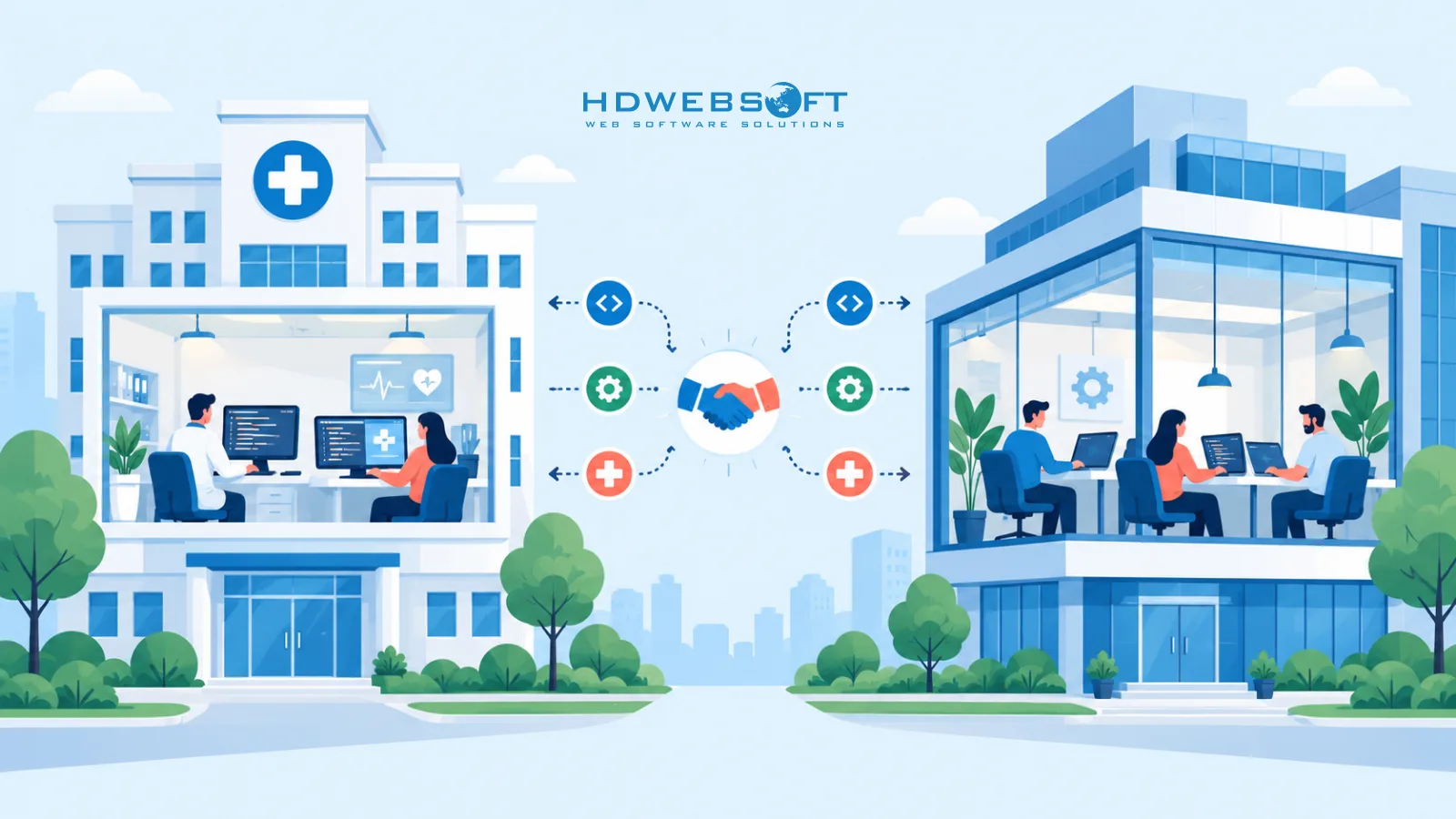
Neither approach is universally better. The right choice depends on what the software means to your organization and what capabilities you already have.
In-house development tends to fit when:
- The software is a long-term strategic asset you will iterate on for years
- You already employ engineers with healthcare domain experience
- Data governance policies make external access to patient records impractical
- Budget flexibility matters less than control over priorities and roadmap
Outsourcing tends to fit when:
- You need to ship faster than internal hiring allows
- The project has a defined scope — a portal, an integration, a telehealth feature — rather than an open-ended product
- Your team lacks specialized skills such as HL7/FHIR integration or healthcare UX
- You want predictable delivery costs instead of permanent headcount
Many organizations land on a hybrid: an in-house product owner and architect working with an outsourced delivery team. This keeps institutional knowledge and compliance oversight internal while the external team supplies engineering capacity.
Advantages of Outsourcing Healthcare Software Development
1. Cost Efficiency
In-house development carries salaries for specialized developers, infrastructure, benefits, and retention — costs that continue whether or not a project is actively shipping. Outsourcing converts most of that into a defined project or team cost. For healthcare organizations that build software occasionally rather than continuously, the savings are substantial.
2. Access to Specialized Expertise
Healthcare software demands an unusual combination: engineering skill plus familiarity with clinical workflows, interoperability standards, and regulations. Established outsourcing partners maintain teams that have already solved problems like EHR integration and HIPAA-compliant architecture — expertise that would take years to build internally.
3. Faster Development Cycles
A dedicated external team works on your project without competing internal priorities. For time-sensitive needs — a new patient-facing service, a regulatory deadline, a competitive gap — that focus can compress timelines significantly compared to hiring and ramping an internal team.
4. Scalability and Flexibility
Healthcare software projects rarely need a constant team size. Outsourcing lets you scale engineering capacity up during build phases and down during maintenance, without the administrative burden of hiring or reducing internal staff.
5. Risk Mitigation
Experienced healthcare vendors have managed compliance, security, and data privacy requirements across many projects. Their established processes — security audits, access controls, documented procedures — reduce the likelihood of regulatory issues compared to a first-time internal effort.
Disadvantages and Risks to Plan For
1. Communication Challenges
Time zone differences, language barriers, and cultural gaps can produce misunderstandings and delays. In healthcare, where requirements involve clinical nuance, miscommunication has higher stakes than in most industries — a misunderstood workflow is not just a bug, it can affect patient care.
2. Quality Control
You have less day-to-day visibility into an external team’s work. Without staged deliveries, code review access, and clear acceptance criteria, quality problems can surface late — when fixing them is expensive.
3. Data Security and Privacy
Outsourced teams may need access to protected health information for development and testing. Every additional party handling PHI expands the breach surface, and regulators hold your organization — not the vendor — accountable for failures. Strong data protection practices must be verified contractually, not assumed.
4. Limited Control
Outsourcing means giving up some control over priorities and process. If the vendor’s incentives diverge from yours — billing hours versus shipping outcomes — the project can drift from strategic goals.
5. Hidden Costs
Contract negotiation, legal review, project management overhead, and rework from misunderstood requirements all add to the headline rate. Budget for the relationship, not just the build.
Healthcare-Specific Requirements When Evaluating a Partner
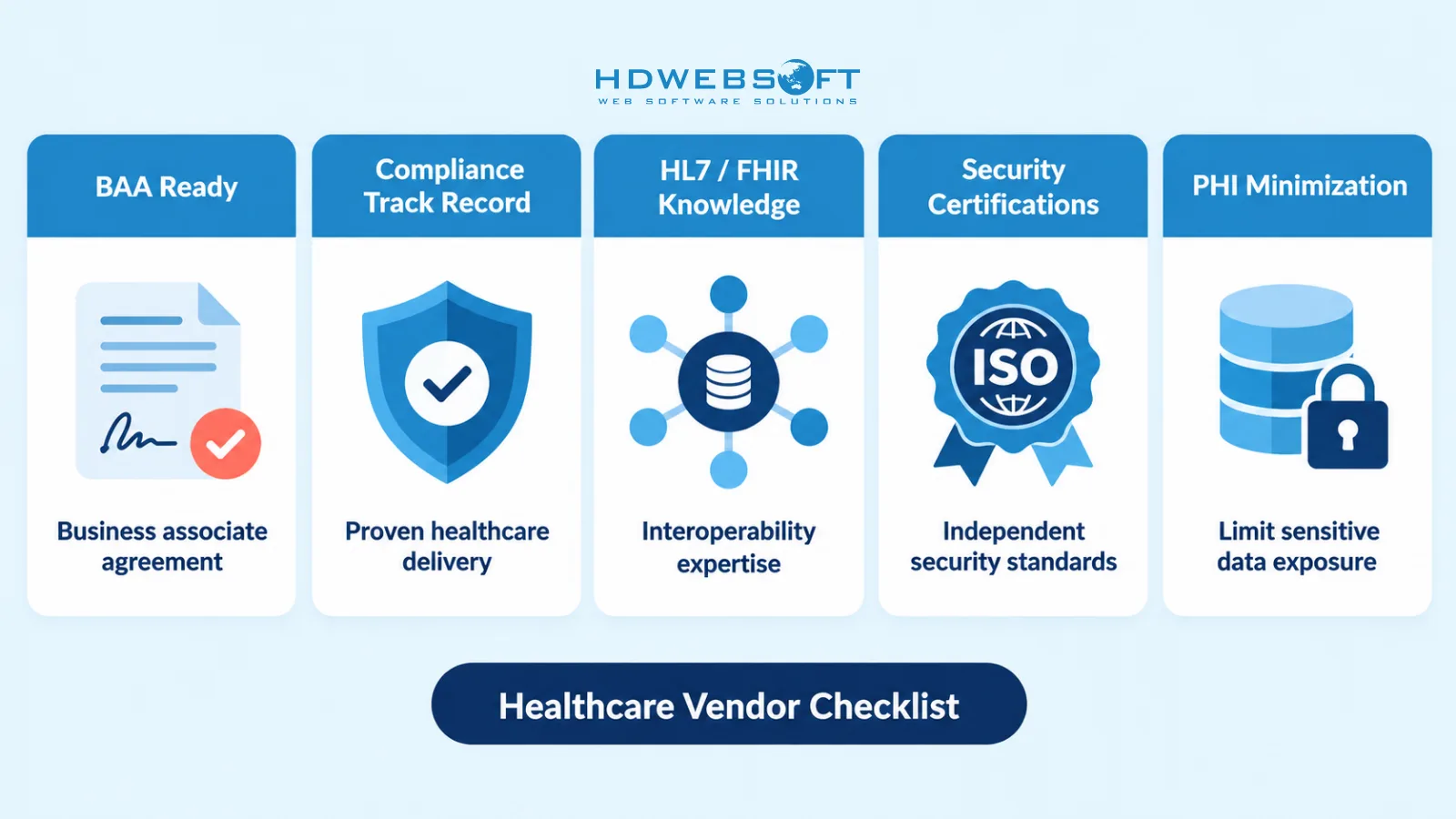
Generic vendor checklists cover portfolio, pricing, and process. Healthcare adds a layer of requirements that should disqualify a partner outright if missing:
- Business Associate Agreement readiness. Any vendor handling PHI must sign a BAA before work begins. Hesitation here is a red flag.
- Verifiable compliance experience. Ask for healthcare references and evidence of HIPAA, GDPR, or equivalent regulatory work — not just claims on a website.
- Healthcare interoperability knowledge. HL7, FHIR, and EHR integration experience determine whether the software fits real clinical environments. See how these fit into broader medical software technology trends.
- Security certifications and practices. ISO 27001 certification, documented access controls, encryption standards, and audit trails should be demonstrable.
- PHI minimization policies. A mature partner uses de-identified or synthetic data in development wherever possible, limiting live patient data exposure.
- Post-delivery support terms. Healthcare software needs ongoing compliance updates and security patches — confirm the vendor’s maintenance model before signing.
Real-world results matter as much as credentials. Reviewing a partner’s delivered work — such as this healthcare knowledge platform case study — shows how they handle healthcare requirements in practice.
How Implementation Typically Works
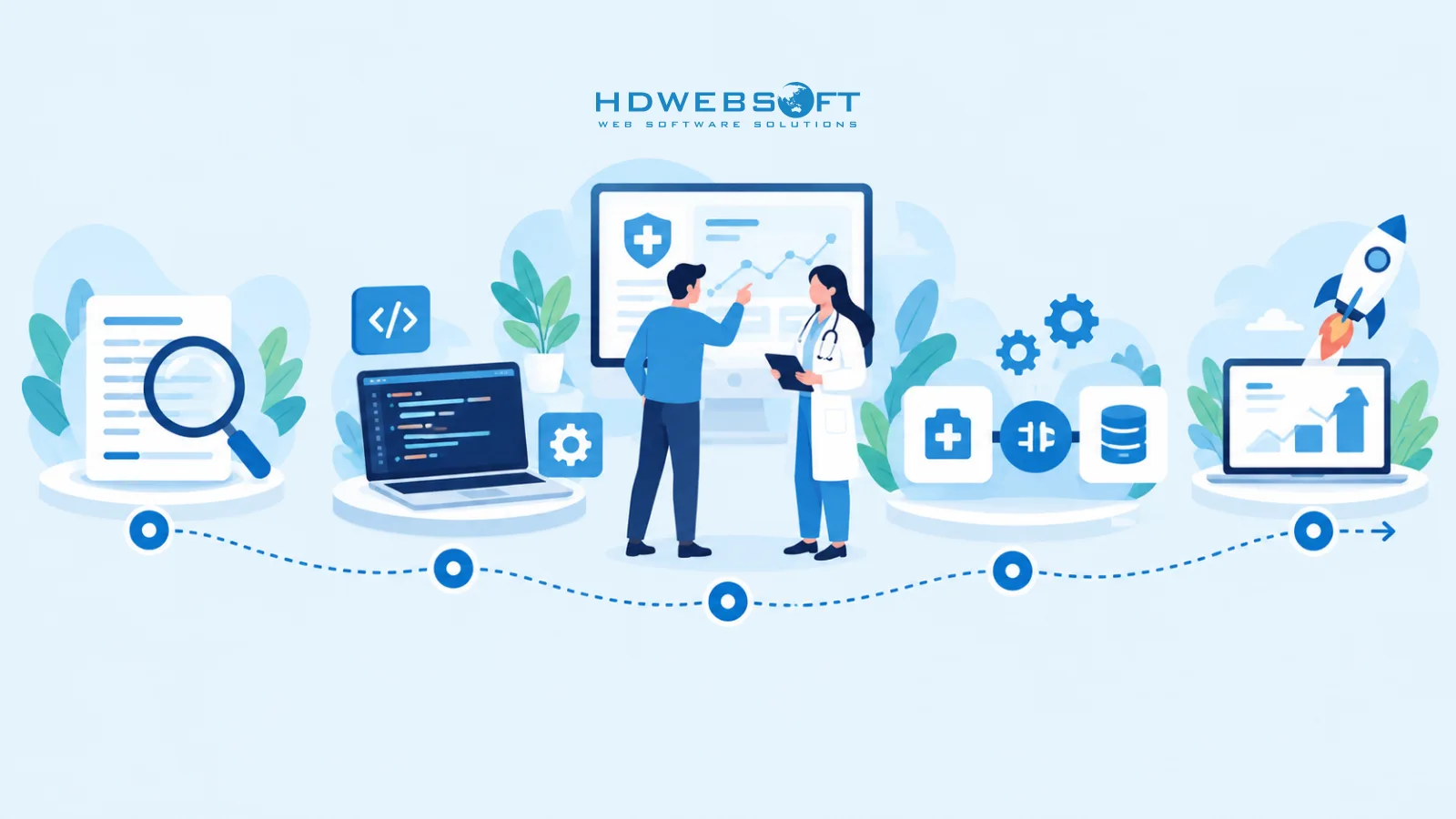
Whether built in-house or outsourced, custom healthcare solutions follow the same broad phases:
- Discovery and planning — needs assessment, scope definition, compliance requirements mapping
- Design and development — iterative builds with stakeholder feedback and prototype reviews
- Integration and testing — connection to EHR and practice management systems, data migration, pilot testing with real users
- Deployment and improvement — phased rollout, user training, monitoring, and continuous updates as regulations and needs evolve
The outsourcing-specific work sits inside these phases: vendor selection during planning, communication cadences during development, acceptance criteria during testing, and support terms at deployment.
What Does Outsourced Healthcare Software Cost?
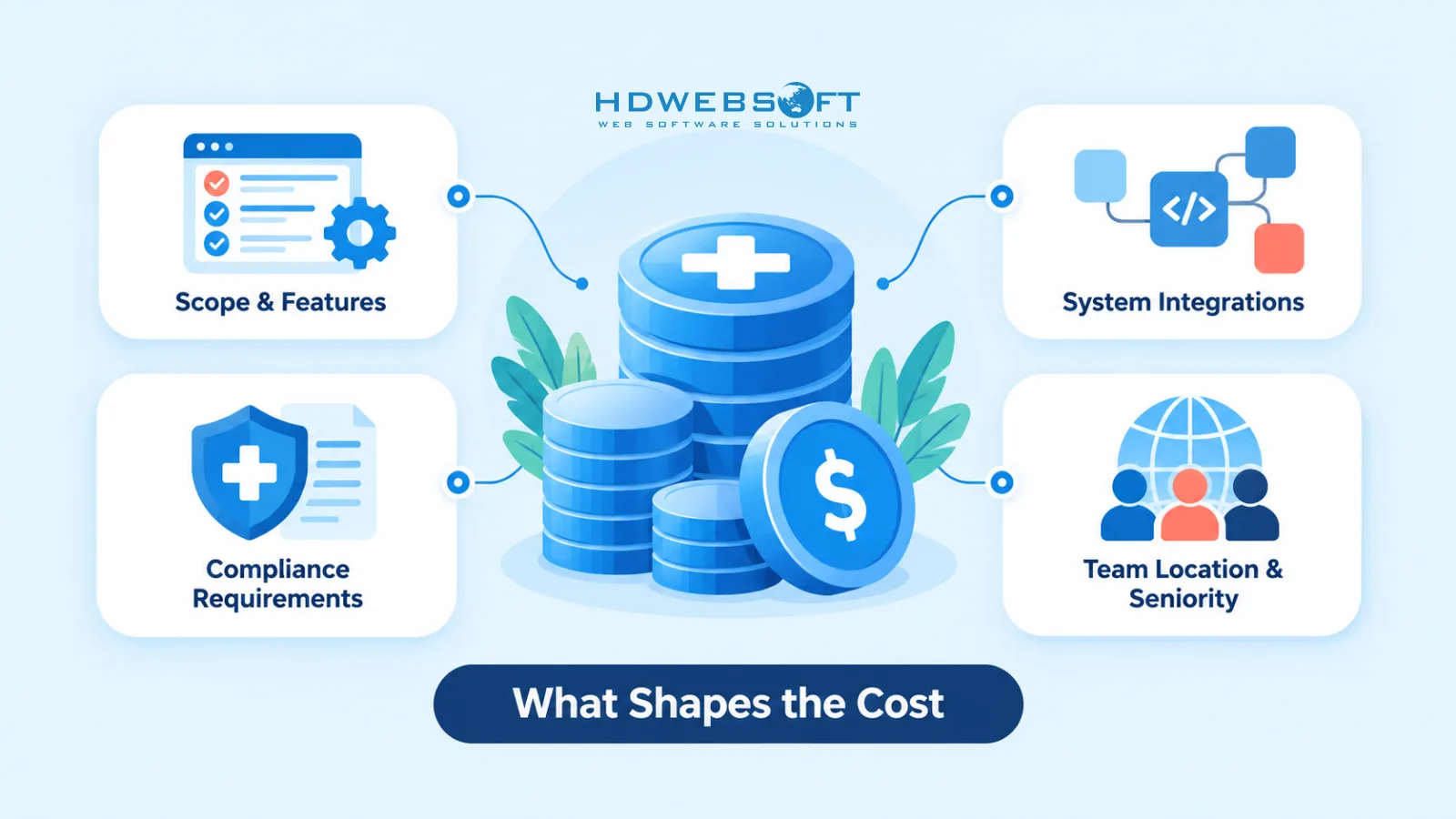
There is no single rate — cost depends on scope, feature complexity, compliance requirements, integrations, and the partner’s location and seniority. What matters more than the headline figure is the comparison basis: outsourcing should be weighed against the fully loaded cost of an in-house team, including hiring, infrastructure, benefits, and the time-to-market delay of building one.
Equally important is budgeting for the less visible line items — legal review, BAAs, ongoing oversight, maintenance, and compliance updates — regardless of which path you choose.
Conclusion
Outsourcing custom healthcare solutions offers real advantages — cost efficiency, specialized expertise, faster delivery, and flexibility — but the industry’s regulatory demands raise the stakes of choosing the wrong partner. The decision framework is straightforward: outsource when speed, specialized skills, or budget predictability matter most; keep development in-house when the software is a core strategic asset and you have the team to match.
Whatever you decide, healthcare-specific due diligence is not optional. BAAs, verifiable compliance experience, and security practices are the baseline — everything else is comparison shopping.
If you are weighing this decision for your organization, our healthcare software development team can help you scope the right approach — contact us to discuss your requirements.
Frequently Asked Questions
Should healthcare organizations outsource software development?
Outsourcing is usually the better fit when the organization lacks in-house engineering capacity, needs to ship faster than internal hiring allows, or wants predictable costs. Building in-house makes more sense when the software is a long-term core asset, the organization already has a strong technical team, or strict data-governance policies make external access to patient data difficult.
What should you look for in a healthcare software outsourcing partner?
Beyond general engineering quality, a healthcare partner should demonstrate HIPAA or equivalent regulatory experience, willingness to sign a Business Associate Agreement, familiarity with healthcare standards such as HL7 and FHIR, security certifications like ISO 27001, and references from healthcare clients.
How do you ensure HIPAA compliance when outsourcing?
Sign a Business Associate Agreement before any patient data is shared, verify the vendor’s security controls and audit history, restrict PHI access to what each task requires, and define breach-notification responsibilities in the contract. Compliance obligations stay with your organization even when development is outsourced.
What are the risks of outsourcing healthcare software development?
The main risks are patient data exposure, quality control gaps, communication friction across time zones, reduced visibility into day-to-day development, and hidden costs in contract management and oversight. Most are manageable with clear requirements, staged deliveries, and a partner with healthcare experience.
How much does it cost to outsource healthcare software development?
Cost depends on scope, compliance requirements, integrations, and the partner’s location and seniority. Outsourcing is typically cheaper than equivalent in-house teams once hiring, infrastructure, and retention costs are counted — but legal review, oversight, and rework should be included in the budget.
What is a Business Associate Agreement (BAA) and why does it matter?
A BAA is a legally required contract under HIPAA between a healthcare organization and any vendor that handles protected health information. It defines how PHI may be used, the safeguards the vendor must maintain, and what happens after a breach. No development partner should touch patient data without one.